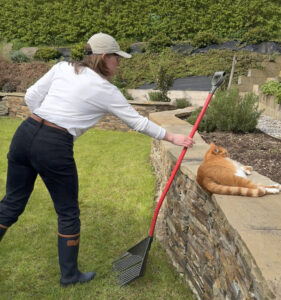
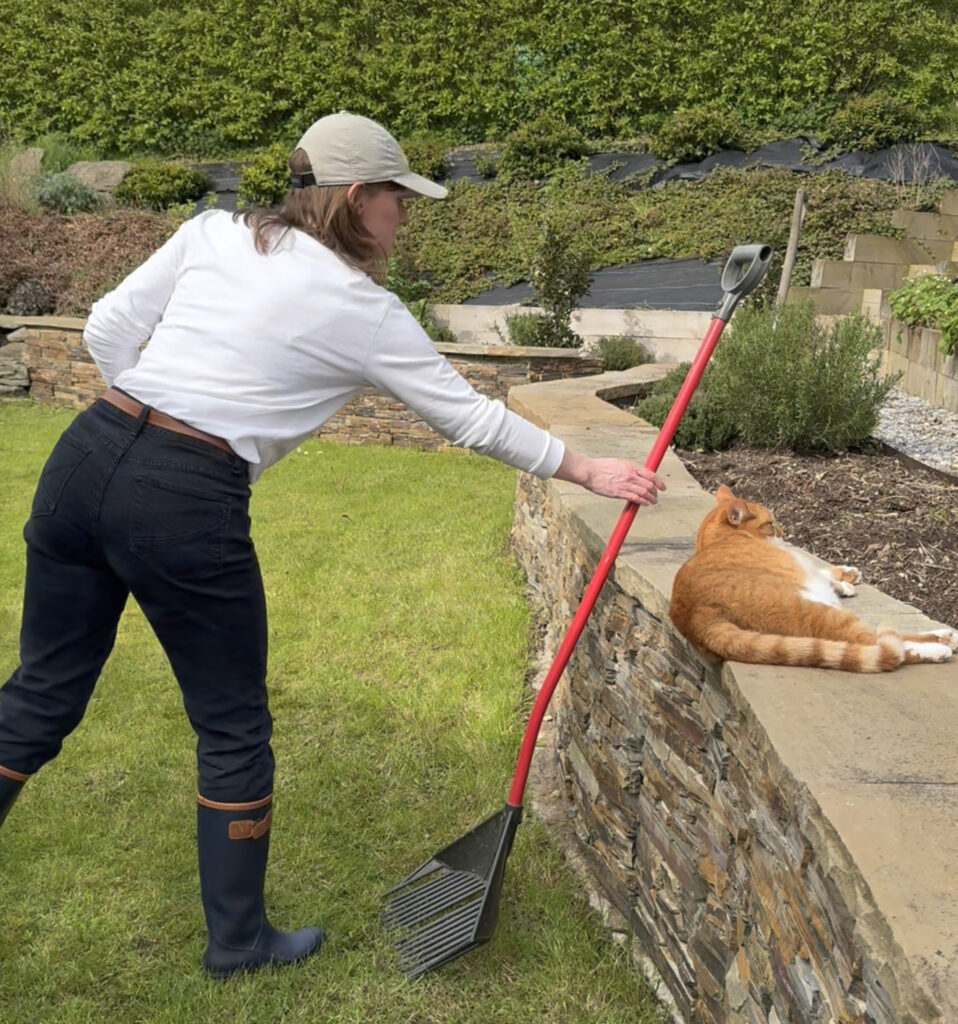
Gardening is one of the most rewarding activities for both body and mind. But it’s also physically demanding; involving bending, lifting, twisting, kneeling, and reaching, often for long periods of time.
Many gardeners only realise how much strain they’ve placed on their body once stiffness or pain sets in.
The good news? A few simple habits can dramatically reduce your risk of back pain and injury, helping you enjoy your time outdoors for longer.
Below are four essential ways to protect your back while gardening.
1. Warm Up Before You Start Gardening
Most people warm up before exercise, but often skip it when gardening. However, gardening is physical work and requires preparation.
A short warm-up is one of the most effective gardening back pain prevention habits you can build.
Gardening involves bending, twisting, lifting, and kneeling, so taking just three minutes to warm up beforehand can help prevent the back strain and injuries commonly associated with gardening.
To make it even easier, you can use tools you already have in the garden as part of your warm-up.
Try these simple movements:
Rake Handle Rotations
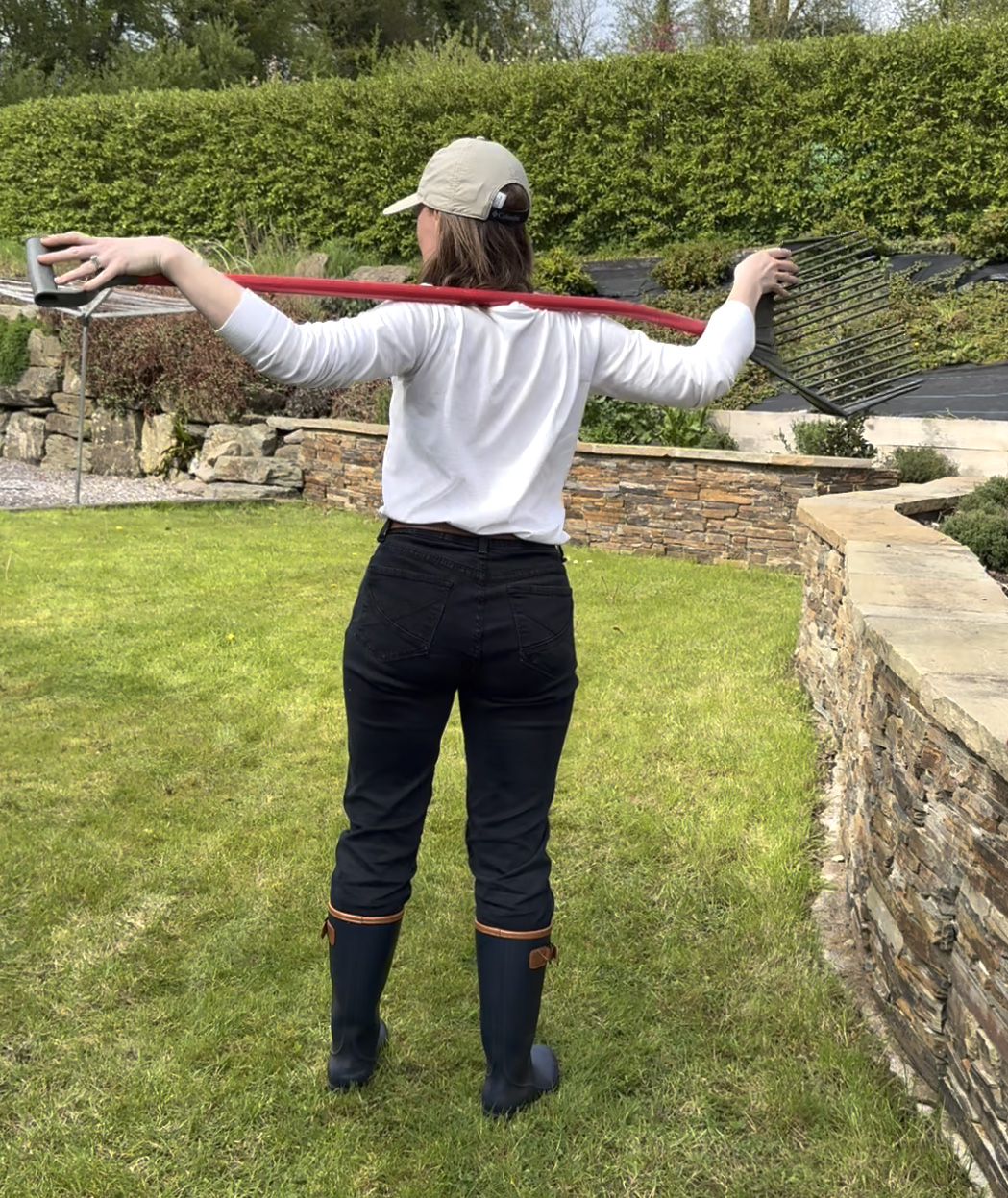
Place a rake across the back of your shoulders and gently rotate your upper body from side to side about 10 times.
This helps warm up your spine and core, preparing your body for twisting movements while digging or planting.
Wall, Fence or Shed Stretch
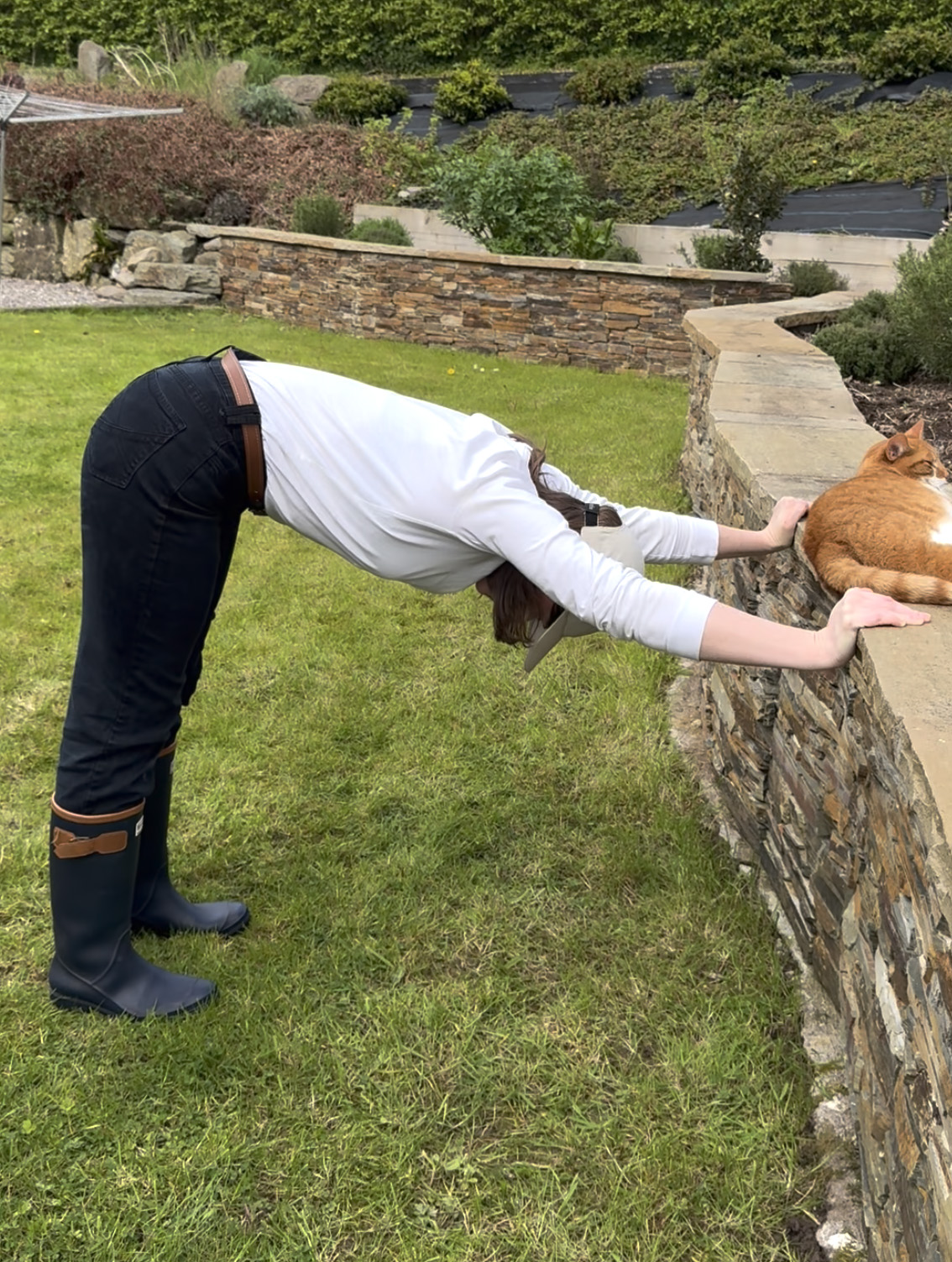
Place your hands on a fence, wall, or shed, step back slightly, and hinge at your hips. Let your chest drop gently and hold for 15–20 seconds.
This stretch supports gardening back pain prevention by opening the back and shoulders before bending tasks.
Watering Can Shoulder Warm-Up
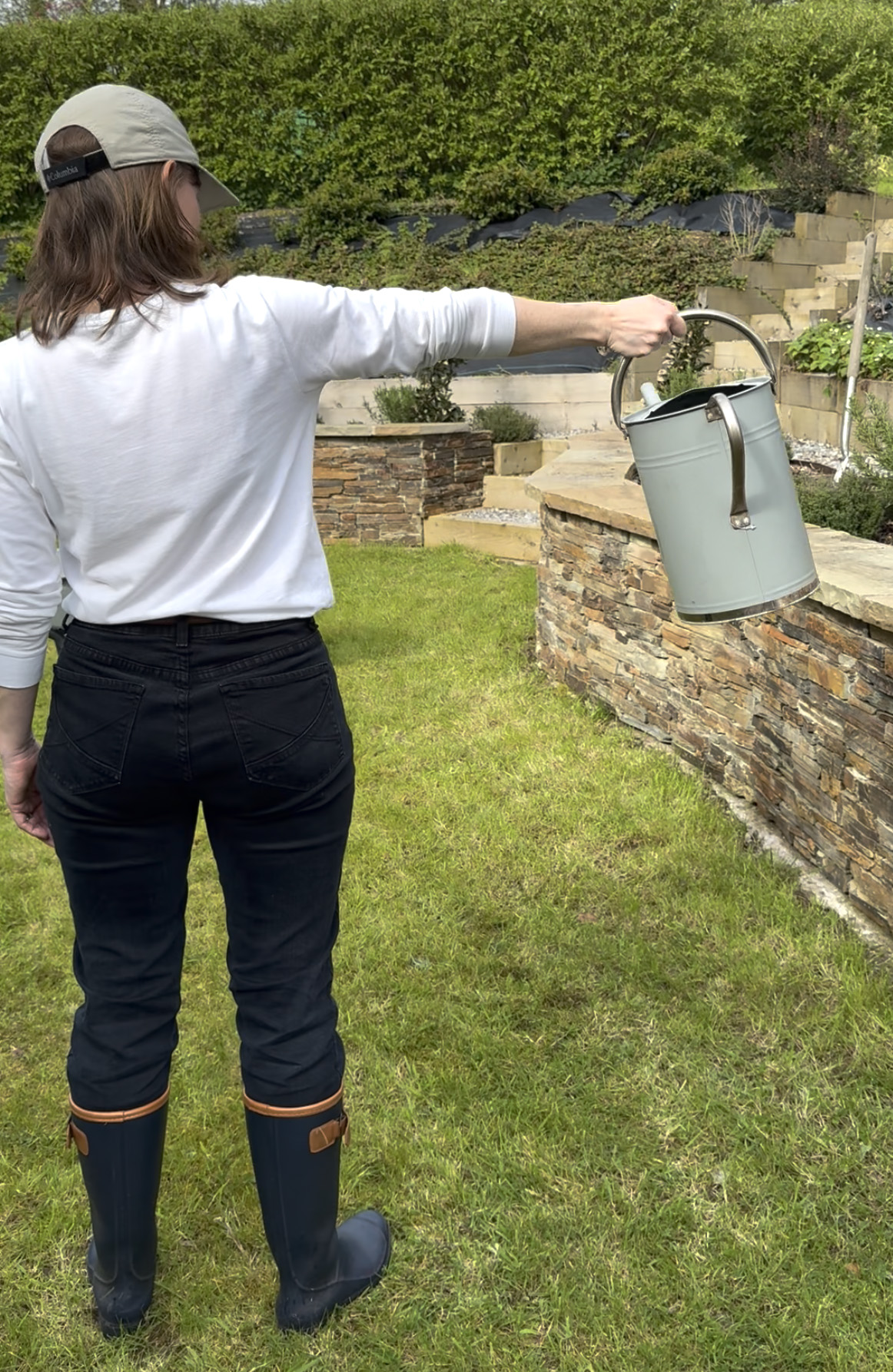
Using an empty watering can, slowly lift your arms to shoulder height and lower them with control.
This warms up your shoulders and upper back, preparing you for lifting pots and tools.
Wheelbarrow Squats
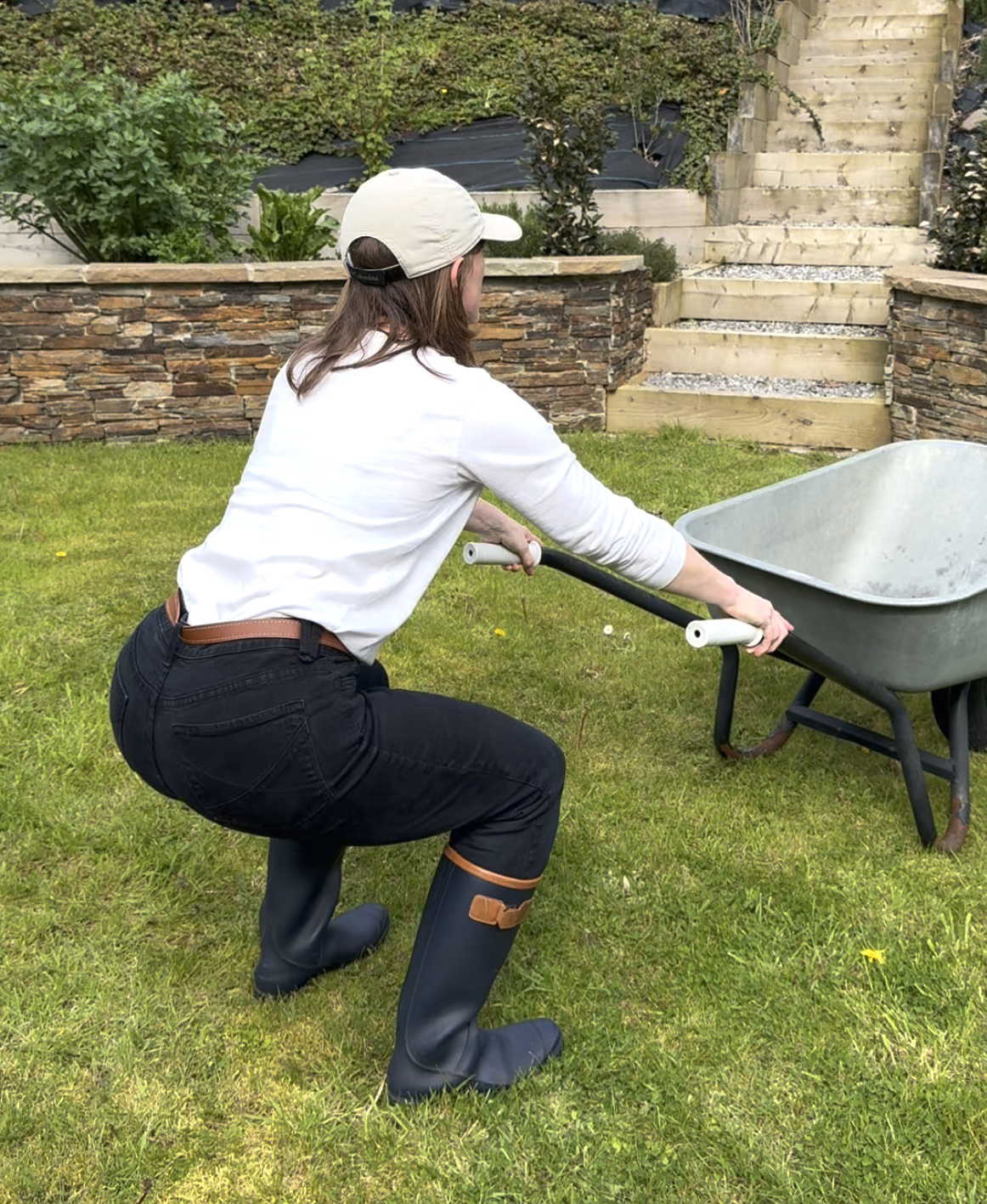
Hold onto your wheelbarrow handles for support and perform 8–10 slow squats, keeping your chest upright.
This activates your legs and glutes, which are essential for safe lifting and digging.
Just a few minutes of preparation can help reduce strain and keep your back happy all day.
2. Lift Safely for Gardening Back Pain Prevention
Most gardening injuries happen when lifting incorrectly.
A common mistake is bending from the waist with a rounded back. This places excessive stress on the lower spine and can easily lead to injury.
Instead, remember these key steps:
Keep the load close to your body
Bend at your hips and knees, not your waist
Avoid twisting while holding weight
Lift using your legs and hips, not your back
When done correctly, your spine stays in a neutral position while your legs do most of the work.
Taking a few extra seconds to lift properly can save you from days, or even weeks, of pain.
3. Take Regular Breaks to Protect Your Back
One of the biggest gardening mistakes is staying in the same position for too long.
Healthy gardening is all about variety of movement.
Try to:
Change position every 10–15 minutes
Stand up and stretch regularly
Use knee pads or a garden stool when needed
Every 20–30 minutes, take a short break to reset your body.
Stand tall, reach your arms overhead, and gently lean back to open the front of your body. Side stretches can also help loosen your spine and reduce stiffness.
Don’t forget hydration
During your break, grab a drink of water. Dehydration can contribute to muscle fatigue and increase the risk of strains and injury. Staying hydrated helps your muscles work more efficiently and keeps your back feeling better for longer.
Even one or two minutes of movement and rest can make a big difference.
4. Bend Using Your Hips, Not Your Back
Many gardeners unknowingly round their back when planting, weeding, or digging. Over time, this creates unnecessary pressure on the spine.
The safer way is the hip hinge technique:
Hinge from your hips
Instead of bending at the waist, push your hips back while keeping your spine neutral and chest lifted.
Use your legs
Slightly bend your knees as you lower yourself, and use your glutes and hamstrings to stand back up.
Avoid twisting
Move your whole body with your feet rather than twisting your spine while reaching or lifting.
This keeps your spine neutral and supports gardening back pain prevention.
Final Thoughts
Gardening should be enjoyable, not painful.
By taking a few minutes to warm up, lifting correctly, moving regularly, staying hydrated, and using safe bending techniques, you can dramatically reduce your risk of back pain.
Small habits make a big difference and your back will thank you for it.
So next time you head into the garden, remember:
Move well, lift smart, take breaks… and enjoy gardening without the pain.
Further reading can be found on the Teagasc website on ways to reduce the likelihood of back injury
Alternatively, check out a previous blog from our own website on 7 simple tips on how to avoid back pain while gardening